The first 30 days after leaving the hospital are the highest-risk period for older adults. Homestead Health's transitional care bridges that gap - coordinating your discharge, monitoring your recovery, and catching problems before they send you back.
501(c)(3) Nonprofit
Phoenix metro area
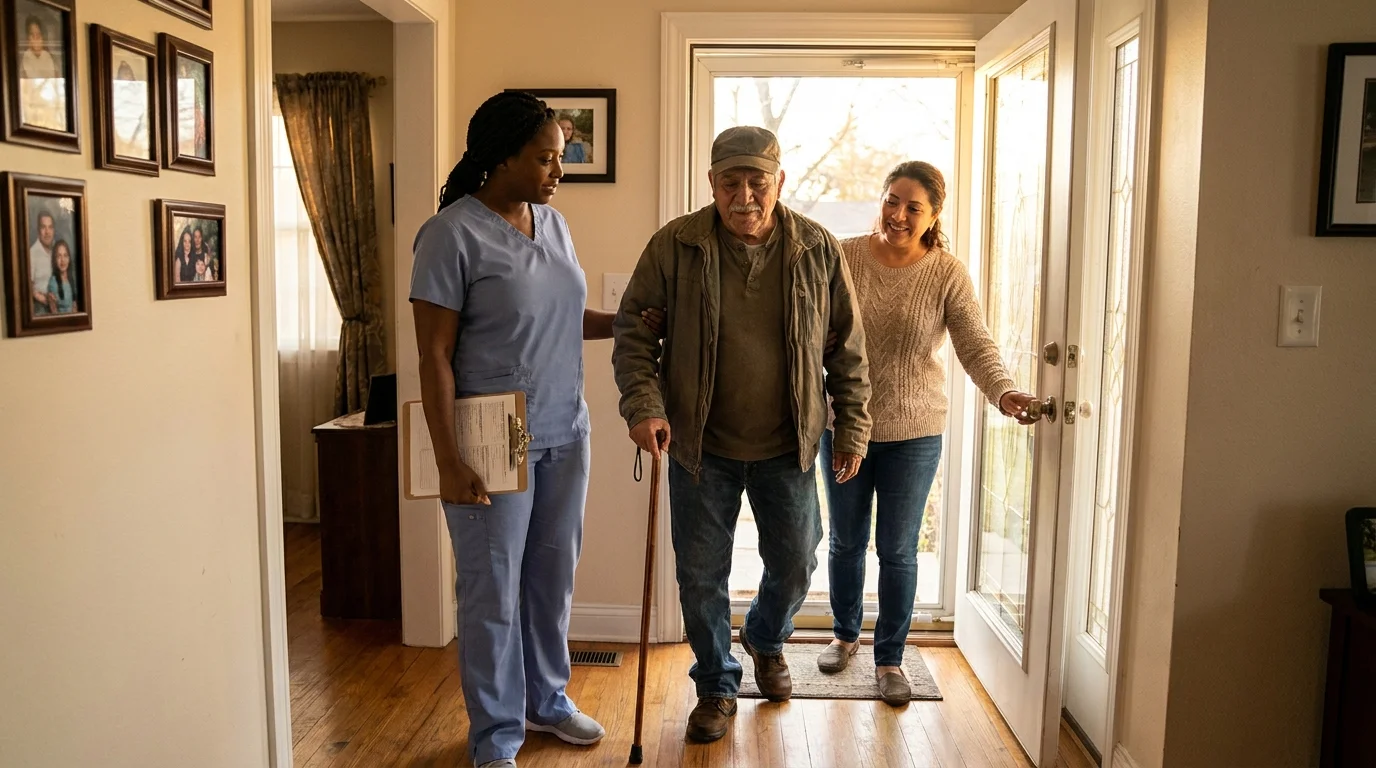
Transitional care is the support that happens between a hospital stay and life at home. It is the bridge that keeps older adults from going back.
Working with the hospital team before you leave to understand your discharge plan. Medication reconciliation - reviewing every change made during your stay. Clear communication of instructions to you and your family.
A home visit within the first day or two of leaving the hospital. Assessment of your home environment for safety risks, review of medications and new instructions, vital signs and initial recovery check.
Regular visits and virtual check-ins during the highest-risk period. Watching for early signs of complications - infection, medication problems, dehydration, confusion.
Communicating with your follow-up providers before and after specialist appointments. Adjusting the care plan if anything changes.
Reviewing all medication changes made during hospitalization. Helping you understand what is new, what changed, and what to watch for.
Keeping family members informed, especially if they are managing care from a distance. Clear guidance on what to watch for and when to call us.
You are 65 or older and were recently hospitalized
You had surgery, a cardiac event, a stroke, or a serious infection
You have a chronic condition (CHF, COPD, diabetes, kidney disease) that was the reason for hospitalization
You live alone or have limited family support at home
You have been hospitalized more than once in the past year
Your discharge instructions felt unclear or overwhelming
You or your family are worried about something going wrong
You need ongoing emergency services - call 911
Your situation requires continued inpatient or skilled nursing facility care
Your recovery is stable with strong existing support already in place
After your transition is stable, establish Primary Care at home to prevent future hospitalizations. Dealing with serious illness? Palliative Care can be added alongside your recovery. Complex situation with multiple providers? Geriatric Care Management keeps everything coordinated. If you are still in the hospital, call us before your discharge. Review intake forms to get started.
Step
1
Reach us at (602) 755-4508. If possible, contact us while you are still in the hospital. We can connect with the hospital team, review your discharge plan, and have a provider ready when you arrive home.
Step
2
A provider comes to your home for a full assessment - medications, safety, vital signs, and recovery status. We catch problems before they escalate.
Step
3
We stay with you through the highest-risk window. Regular visits and check-ins, fast response if something changes. Your care plan adjusts as your recovery progresses.
The calls I dread are the ones that come a week after discharge - the family found their parent confused, or the wound is infected, or they never made it to the follow-up appointment. That is exactly what we are here to prevent. When we are in from the start, those calls do not happen.
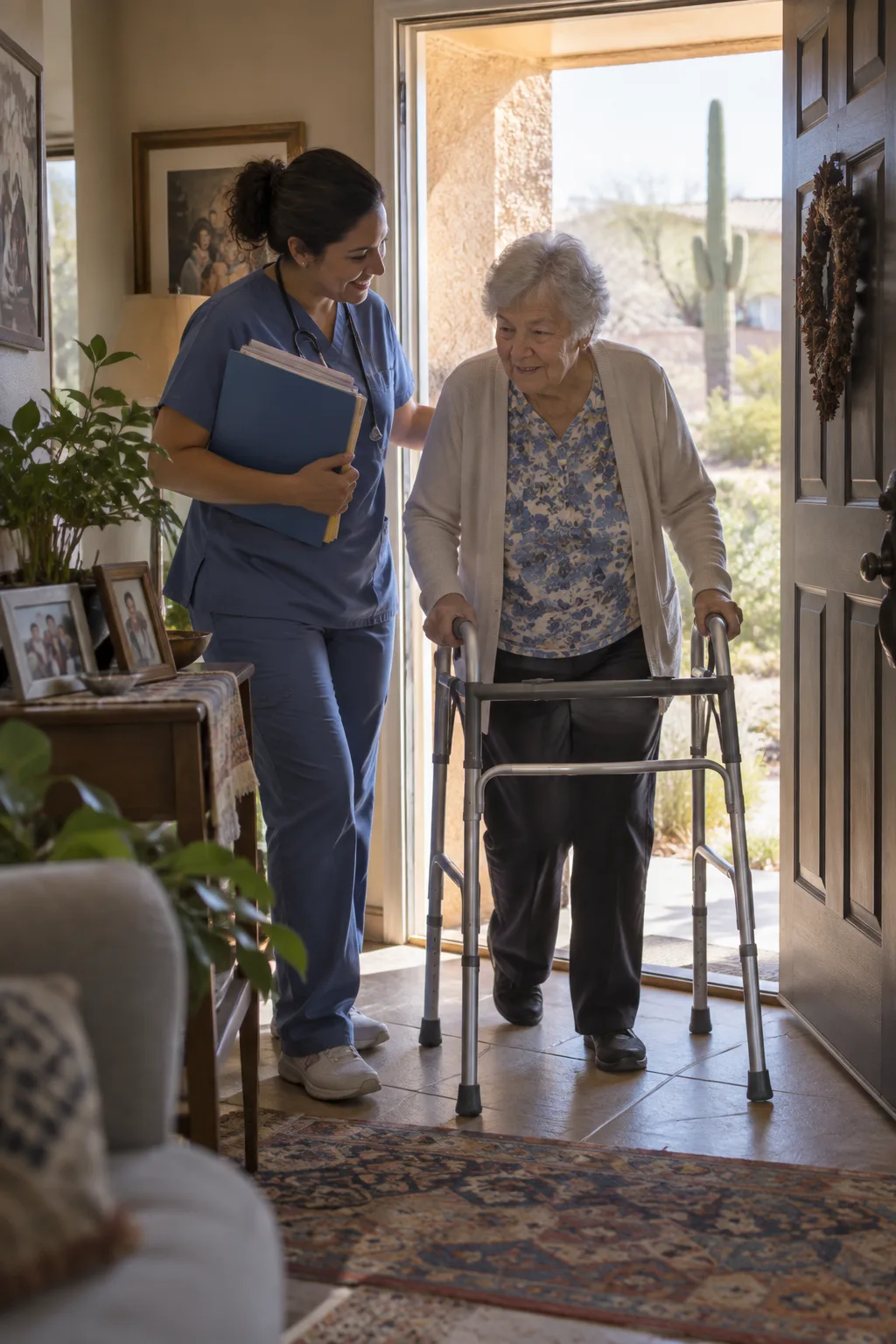
Have a question not answered here? Call us directly - we are happy to talk through your situation.
How soon after discharge can Homestead Health start?
We try to have a provider visit within the first day or two of your return home. If possible, contact us before your discharge date so we can be ready.
Does insurance cover transitional care?
Coverage varies by plan and service type. Call us at (602) 755-4508 and we will walk through your options.
My parent was just discharged and no one set this up - is it too late?
No. Call us at (602) 755-4508 right now. We can often start very quickly, and a few days in is still well within the high-risk window.
Do I need a doctor's referral to use transitional care services?
Contact us to discuss referral requirements for your situation.
What if something goes wrong between your visits?
For medical emergencies, always call 911. Contact us to discuss after-hours and emergency communication options.
The first few days home are the most important. Call us now at (602) 755-4508 - we move quickly when the situation calls for it.
