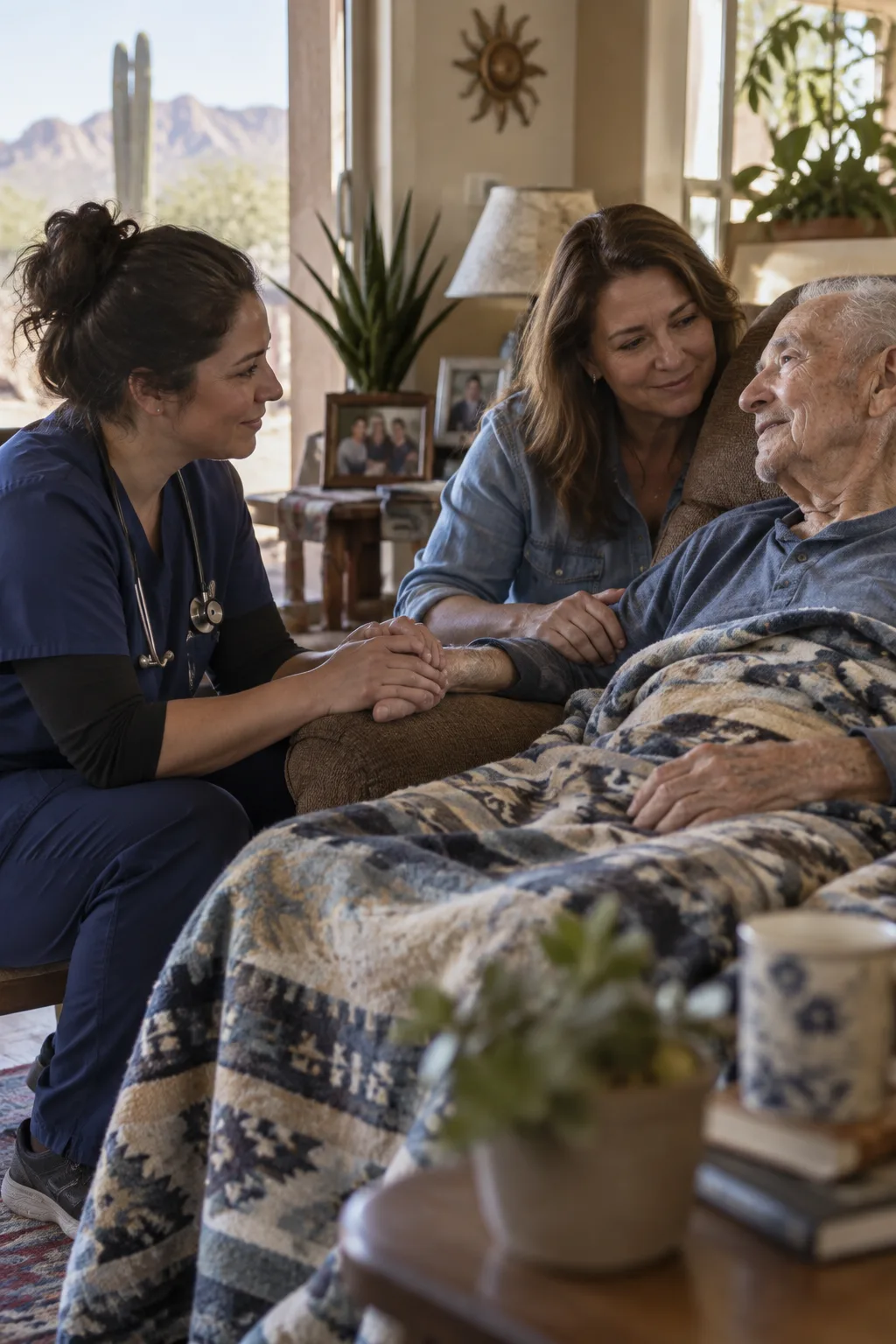
For adults living with serious illness, palliative care at home means better quality of life, more control over your care, and fewer frightening trips to the emergency room.
501(c)(3) Nonprofit
Phoenix metro area

Our palliative care services are designed to improve quality of life for seriously ill adults while keeping them at home and out of the ER.
Pain assessment and management, plus relief from nausea, shortness of breath, fatigue, and other symptoms. Regular reassessment as your condition changes.
Honest conversations about diagnosis, prognosis, and what to expect. Support for anxiety, depression, and fear that often accompany serious illness.
Working alongside your oncologist, cardiologist, or other specialists. Preventing gaps in communication between providers. Helping you understand your options.
Helping families understand what is happening and what comes next. Guiding conversations about care goals and preferences. Reducing the burden on family caregivers.
Conversations about your wishes for future care. Guidance on advance directives, healthcare proxy, and living wills. Ensuring your providers know your preferences.
Regular visits, fast response when something changes, and coordination with your full care team. You are not navigating this alone.
Adults with heart failure (CHF), COPD, or cancer at any stage
Those managing kidney disease, Parkinson's, or neurological conditions
Adults in stroke recovery or post-hospitalization decline
Those whose current care feels fragmented or unresponsive
Families who need help understanding options and what comes next
Anyone managing a serious illness who wants a team focused on comfort
Patients who need emergency or acute intervention only (call 911)
Patients who need exclusively curative treatment without comfort support
Those whose situation may be more appropriate for hospice (we can discuss the difference)
Many palliative care patients also benefit from Primary Care for ongoing health management. Complex cases often need Geriatric Care Management for full coordination. Coming home from a hospitalization? Transitional Care can help. Access patient resources and forms before your first visit. If our work resonates with you, support our work as a 501(c)(3) nonprofit.
Step
1
Call (602) 755-4508 or reach out to contact@homesteadhealth.org. We will talk about the situation - what is happening medically, what is most difficult, and whether palliative care makes sense right now.
Step
2
A Homestead Health palliative care provider comes to your home. We review your medical history, current symptoms, and care goals together.
Step
3
Based on your needs and preferences, we develop a care plan. We visit regularly, respond quickly when something changes, and keep the rest of your care team informed.
What I hear most from families is that they wish they had called sooner. Palliative care is not about giving up. It is about making the time you have as good as it can be - at home, with the people you love.
Have a question not answered here? Call us directly - we are happy to talk through your situation.
Is palliative care the same as hospice?
No. Hospice is a specific program for patients who have stopped pursuing curative treatment and have a terminal prognosis. Palliative care can happen at any stage of illness, alongside any other treatment. The goals overlap - comfort and quality of life - but palliative care is broader and starts earlier.
Does Medicare cover palliative care?
Coverage details vary by plan and service type. Call us at (602) 755-4508 and we will walk through your coverage options.
Will my other doctors still be involved?
Yes. Palliative care works alongside your existing medical team. We coordinate with your specialists and keep everyone on the same page.
What if my loved one is not comfortable with the idea of palliative care?
That is common. Many people associate palliative care with giving up. If that is a concern, call us. We are happy to have a conversation with the patient and family together to explain what palliative care actually involves - and what it does not mean.
How quickly can you start?
Contact us to discuss availability and intake timeline for your situation.
Palliative care is about having a team beside you. Call (602) 755-4508 or email contact@homesteadhealth.org - we will answer your questions honestly, with no pressure.
